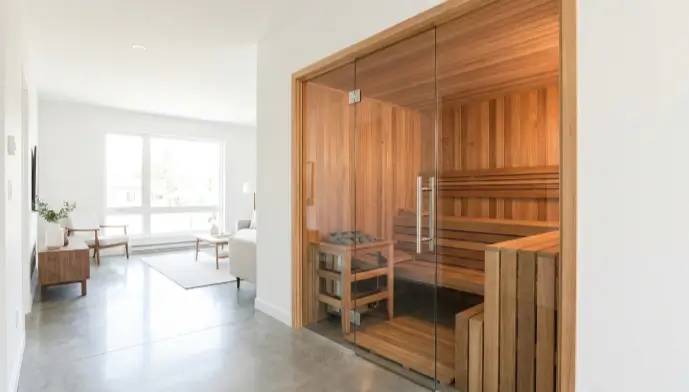
Out of everything sold alongside a home sauna, four accessories consistently affect how the cabin performs: a combined thermometer and hygrometer, a timer switch wired to the heater circuit, a slatted backrest, and a sauna-rated bulb for the interior light. Everything else, from aromatherapy kits to branded headrests to decorative stone displays, is a comfort or style choice with no real effect on heat retention, wood longevity, or safety. Sorting the functional short list from the upsell list before checkout is the fastest way to keep a build on budget.
Which Accessories Change How the Sauna Actually Performs?
A combined thermometer and hygrometer sits at the top of the functional list, and it matters more for a traditional heat sauna than an infrared one because humidity swings the perceived temperature significantly once water hits the rocks. Without a reliable reading, it is easy to oversteam a small cabin, which fogs the door, saturates the wood faster than normal drying can keep up with, and pushes the heater to work harder than the room actually needs. A basic model runs under $30 and mounts on the wall opposite the heater, away from direct heat exposure that can skew the reading. A timer switch is the second functional item, wired inline with the heater circuit so a session shuts off automatically rather than relying on someone remembering to flip a breaker. Left unmanaged, a heater running an extra hour past a session’s end wastes real electricity over a year and shortens the working life of the heating elements.
Backrest and Headrest: Comfort Upgrade or Real Necessity?
A slatted backrest keeps skin off the hottest part of the upper bench, where wood temperature runs noticeably higher than at seated height, and most owners who skip it end up adding one within the first few months. Pricing generally runs $60 to $150 depending on whether the wood matches the cabin interior. A headrest is a smaller comfort item on top of that, useful for longer sessions but far from essential for anyone doing shorter fifteen to twenty minute rounds. Comparing kit pricing across a couple of retailers before adding one to a cart, SweatDecks’ lineup included, is worth the few extra minutes since backrest pricing varies more between sellers than the heater or panel pricing does.
See also: Benefits of Cloud Computing for Businesses
Lighting: What Actually Needs to Be Sauna-Rated?
Standard household bulbs are not built for a box that regularly hits 150 to 195 degrees Fahrenheit with high humidity, and a normal bulb will fail early or, in rarer cases, shatter from the heat and moisture combination. A sauna-rated bulb, usually a sealed 25 to 40 watt unit designed for high-heat, high-humidity fixtures, is a small cost, typically $10 to $20, but it is a genuine safety and durability item rather than a style upgrade. LED sauna bulbs exist too and run cooler, though buyers should confirm the specific model is rated for sauna conditions rather than just “damp location,” which is a lower bar meant for bathrooms, not a 190 degree cabin.
Which Accessories Are Purely Optional?
Aromatherapy kits, essential oil diffusers, and scented sauna stones affect the smell of the steam in a traditional unit and nothing else. They have no measurable effect on heat retention, session length, or wood condition, and they are entirely a matter of taste. Decorative items like carved backrests, branded buckets, or accent lighting fall in the same category: pleasant, priced at a premium over the functional version, and skippable without any real downside. Bucket and ladle sets are a middle case, functionally necessary for a traditional wet sauna since that is how water reaches the rocks, but the $20 basic version does the same job as a $90 finished-wood version.
How Should a First-Time Buyer Prioritize Spending?
A reasonable order of priority for a limited accessory budget starts with the timer switch and thermometer/hygrometer combo, since both affect the heater’s working life and the safety of unattended operation. A backrest comes next for anyone planning regular use rather than occasional novelty sessions. Lighting only needs attention if the cabin ships without a sauna-rated fixture already installed, which is increasingly rare on complete kits. Everything past that point, scent, décor, matching wood grain on optional trim, is discretionary spending that does not change how well the sauna actually works.
How Much Should a Full Accessory Set Add to the Budget?
A bare-minimum functional set, timer switch, thermometer and hygrometer combo, and a sauna-rated bulb, generally adds $100 to $180 on top of the cabin price. Adding a backrest pushes the total closer to $200 to $300. A fully outfitted cabin with a bucket and ladle set for a traditional unit, a headrest, and a wood-safe cleaning kit typically lands in the $300 to $450 range above the base unit cost. None of that is required on day one, and a buyer on a tight budget can start with just the timer and thermometer, then add comfort items over the following months once the sauna proves it gets used regularly rather than sitting idle after the first few weeks of novelty.
What Does the Research Say About Sauna Use Generally?
None of this changes the underlying reason most people buy a sauna in the first place. A 2018 review in Mayo Clinic Proceedings summarized cardiovascular associations across several Finnish cohort studies tied to regular sauna bathing, and a separate 2023 follow-up review looked at whether combining sauna use with other lifestyle habits produced additional associations worth noting. A broader 2018 physiology review covered how the body responds to repeated heat exposure more generally. These remain population-level associations rather than guarantees for any individual, and accessories have no bearing on them one way or the other, but they are useful context for anyone deciding how much to spend on a cabin versus how often they will actually use it.
Frequently Asked Questions
Is a hygrometer actually necessary in a sauna? For a traditional sauna, yes. Humidity affects how hot a session feels more than the thermometer alone suggests, and a combined unit, usually under $30, prevents oversteaming the cabin.
Do I need a backrest or is the bench enough? A bare bench works, but a slatted backrest keeps skin off the hottest wood and makes longer sessions more comfortable, generally for $60 to $150.
Are sauna aromatherapy products worth buying? They are optional and purely preference. A few drops of sauna-safe oil in the water bucket changes the scent of the steam but has no effect on heat output or the wood itself.
What accessory do first-time buyers most often skip and regret? A dedicated timer switch. Without one, a heater can run longer than intended, wasting electricity and shortening element life, and an inline timer relay costs well under $100.
References
- Clinical Effects of Regular Dry Sauna Bathing: A Systematic Review, Evidence-Based Complementary and Alternative Medicine, 2018
- Does the Combination of Finnish Sauna Bathing and Other Lifestyle Factors Confer Additional Health Benefits? A Review of the Evidence, Mayo Clinic Proceedings, 2023
- Effects of heat and cold on health, with special reference to Finnish sauna bathing, American Journal of Physiology, 2018
By Jason Whitfield